

EU Sunscreen Testing: Shift Toward In-Vitro SPF & UVA Testing
The European sunscreen testing landscape is moving toward more ethical, reproducible and scientifically validated laboratory methods. On 15 September 2026, the European Commission published findings from an EU-wide testing campaign supporting the reliability of in-vitro sunscreen testing compared with conventional testing on human volunteers.
The campaign evaluated 74 sunscreen and day-cream products across 11 EU countries, reporting a high correlation between in-vitro and conventional in-vivo SPF results. The findings support wider adoption of testing approaches that avoid exposing human volunteers to UV radiation to induce sunburn.
For sunscreen manufacturers, cosmetic brands, and exporters, this development highlights the importance of reliable SPF and UVA protection data to substantiate product claims and support regulatory compliance.
What Has Changed in 2026?
The European Commission’s September 2026 announcement supports greater use of in-vitro methods for determining sunscreen protection.
- In-Vitro SPF Testing – ISO 23675:2024
This standardized method determines static Sun Protection Factor (SPF) through laboratory measurement of UV transmission across a sunscreen film applied to standardized plates. The method avoids exposing human volunteers to UV radiation.
- In-Vitro UVA Testing – ISO 24443
ISO 24443:2021, including Amendment 1:2026, addresses the determination of UVA photoprotection in vitro. UVA evaluation is essential for assessing broad-spectrum protection alongside UVB-related SPF.
- More Ethical & Reproducible Testing
In-vitro testing controls product application, substrate characteristics, temperature, and drying conditions, reducing variability associated with human skin characteristics and volunteer availability.
Key Testing Parameters
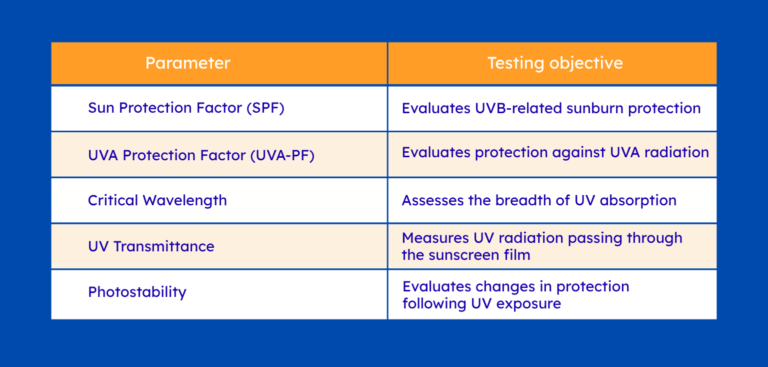
The EU Recommendation on sunscreen efficacy identifies a UVA protection factor of at least one-third of the labelled SPF and a critical wavelength of at least 370 nm as relevant criteria for UVA protection claims.
Important Limitations to Consider
Although in-vitro methods are gaining regulatory and scientific support, their applicability depends on the product and claim.
- ISO 23675:2024 applies to sunscreen emulsions and alcoholic one-phase formulations, but excludes loose or compressed powders and sticks.
- The method determines static SPF and does not establish water-resistance performance.
- Additional method development and standardization are still needed for certain product formats and water-resistance claims.
Regulatory note: The September 2026 Commission announcement supports prioritizing non-harmful testing approaches. It does not, by itself, establish a blanket legal requirement replacing all in-vivo sunscreen testing across every product category. Manufacturers should verify applicable market requirements and claim-specific methods.
How Eureka Supports Sunscreen Manufacturers
Eureka supports cosmetic manufacturers, sunscreen brands, and personal-care companies with analytical testing solutions to help assess product quality and regulatory compliance.
Our relevant testing support includes:
- UV filter identification and quantification
- Chemical analysis of sunscreen formulations
- Heavy metals and restricted substance screening
- Preservative and microbiological testing
- Stability and product quality evaluation
- Analytical support for formulation development and compliance documentation
Specialized SPF and UVA efficacy studies should be conducted using applicable validated methods and suitably equipped facilities.
Prepare for the Future of Sunscreen Testing
As international standards evolve, scientifically validated testing is essential for substantiating sunscreen performance, supporting product safety and maintaining consumer confidence.